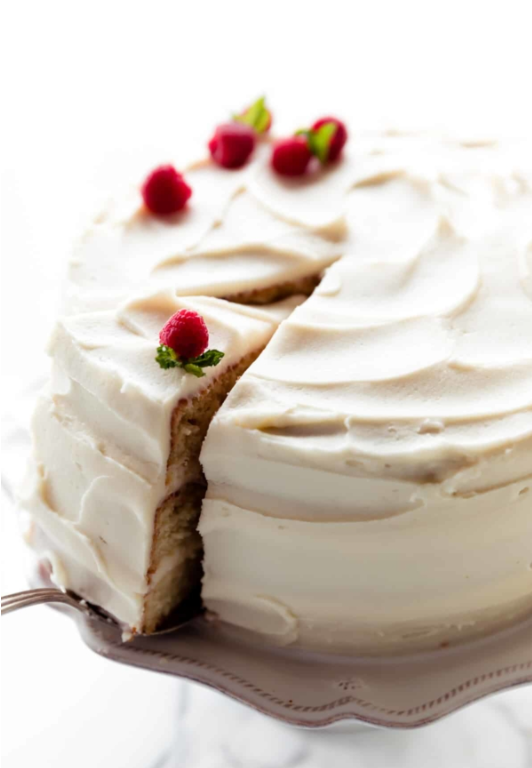
With its outstanding vanilla flavor, pillowy soft crumb, and creamy vanilla buttercream, this is truly the best vanilla cake I’ve ever had. And after 1 bite, I guarantee you’ll agree.
Out of all the cake recipes on my website, there’s a glaring absence. There’s white cake with a pristine soft crumb, vanilla naked cake with a flavorful tight crumb, and checkerboard cake with a whimsical design.
What about a classic vanilla layer cake draped in vanilla buttercream? I already have homemade vanilla cupcakes and a vanilla 6 inch cake covered and now in all its crowning glory (and after plenty recipe testing catastrophes), I present you with cake perfection:
What Makes it the Best Vanilla Cake?
Let’s count the ways!
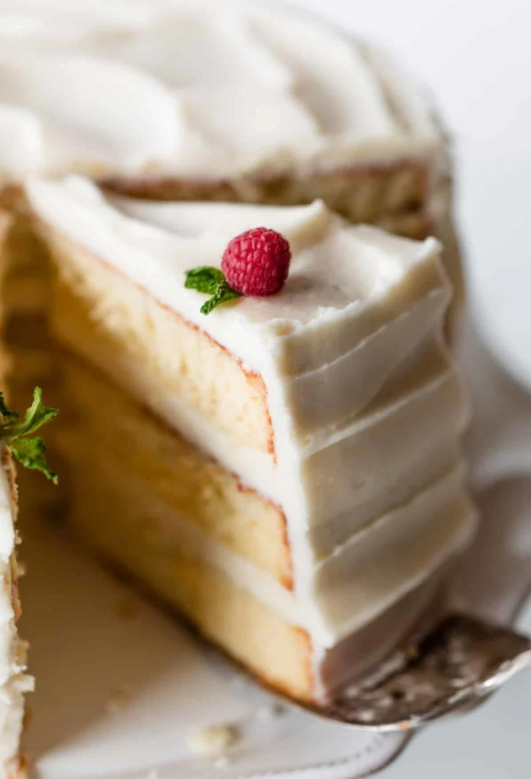
- Soft, light crumb from cake flour
- Fluffy from extra egg whites
- Buttery and cakey from creamed butter
- Stick-to-your-fork moist from eggs & buttermilk
- Extra flavor from pure vanilla extract
Not to mention its versatility: This vanilla cake batter is strong enough for shaped cakes, tiered cakes (see the slight variation in my homemade wedding cake recipe), and holds up beautifully under fondant. Use this batter for vanilla cupcakes, Bundt cake, or even piñata cake. It’s classy enough for a wedding celebration, but unassuming enough for a big family dinner.
Behind the Vanilla Cake Recipe
After years of cake successes and flops, I’m confident in this homemade vanilla cake. During my recipe testing, I combined my white cake recipe and naked cake recipe. These are two reader favorites and I knew they’d be the best starting point. At first there were too many eggs and I quickly learned sifting cake flour was NOT doing any favors.
You need the following power ingredients:
- Cake Flour: If you want a fluffy and soft bakery-style vanilla cake, cake flour is the secret. The cake will be denser and heavier using all-purpose flour.
- Eggs & 2 additional egg whites: 3 whole eggs provide structure, moisture, and richness. 2 extra egg whites keep the cake light and airy. I don’t recommend using 4 whole eggs; stick to the 3 egg & 2 egg white combination.
- Baking Powder & Baking Soda: Remember the differences in baking powder vs baking soda and why we use both in some recipes? Using enough baking powder to give these layers height gave the cake a bitter aftertaste. Baking soda allows us to use less baking powder.
- Buttermilk: Buttermilk is an acidic ingredient and baking soda requires an acid to work. Plus buttermilk yields an EXTRA moist cake crumb. See recipe note about using a DIY buttermilk substitute.
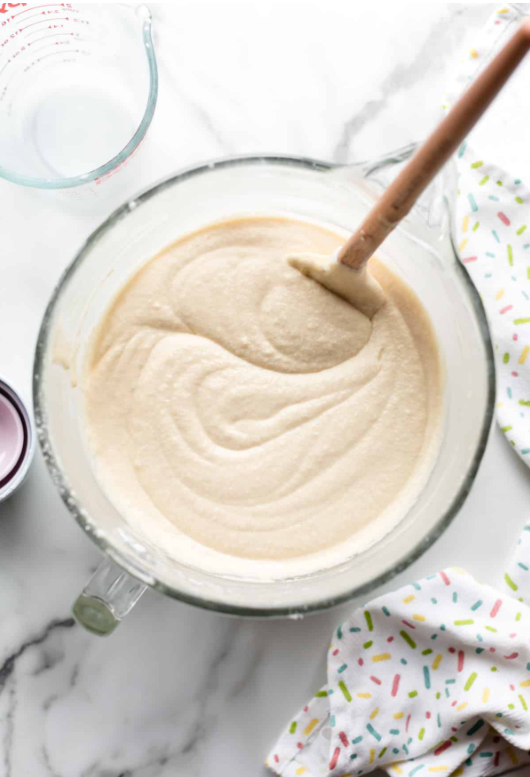
For more prominent vanilla flavor, use homemade vanilla extract. (What a fun DIY gift!) This vanilla cake batter is moderately thick and fits perfectly in 3 9-inch cake pans. We actually use the same exact batter to make snickerdoodle cake.
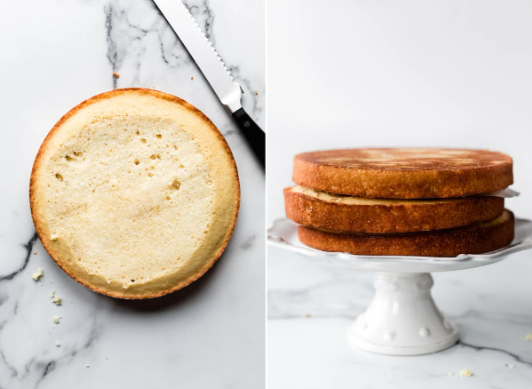
Do you know how to level a cake? Let me help. It’s really easy. You can use a fancy cake leveler, but I use a serrated knife. Carefully slice off the tippy top of the cooled cake layers, creating a flat surface. Leveling cakes doesn’t require a ruler, talent, or any mathematical equations. Instead, just use your eyes, hands, and a knife.
Leveling the cake layers promises a straight and sturdy layer cake.
How Much Frosting Between Cake Layers?
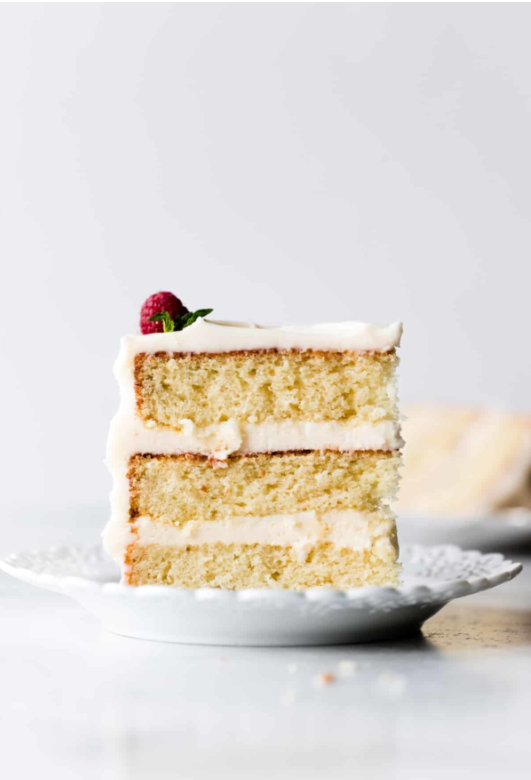
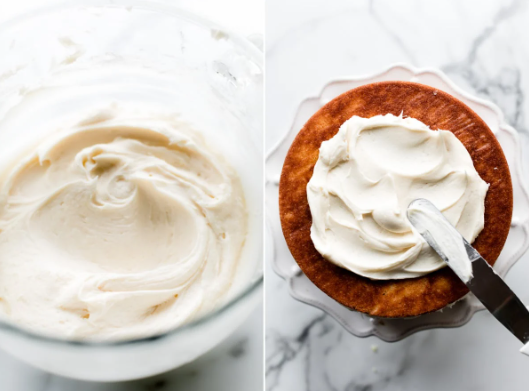
I always eyeball the amount of frosting between cake layers, but I measured when I decorated the pictured cake. The vanilla buttercream recipe below yields about 6 cups of frosting. I recommend you use about 1.5 heaping cups of buttercream between each cake layer and reserve the last 3 cups for outside the cake. If you are going to add a filling such as raspberry cake filling, you’ll use less frosting between the layers. You can use this detailed how to assemble and decorate a layer cake post as a guide!
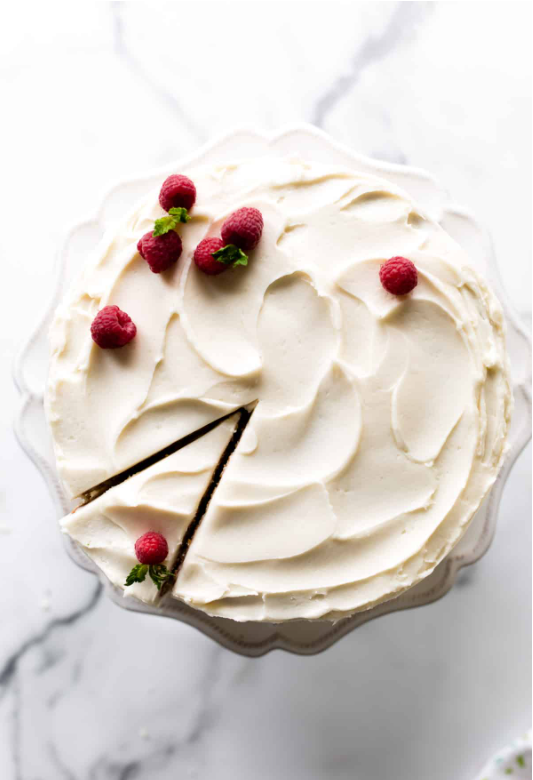
Cake Decoration Inspiration: For a simple look, stick with vanilla buttercream, fresh berries, and mint sprigs. You can also decorate with chocolate buttercream (I recommend the same amount from this piñata cake), rainbow sprinkles, a chocolate ganache drip like on this chocolate chip cake, or even beautiful buttercream flowers.
Homemade Vanilla Cake Success Tips
Learn from my mistakes and bake the best cake on the 1st try!
- Follow the recipe closely. Use each power ingredient listed.
- Use room temperature ingredients. The batter mixes together evenly when all the cake ingredients are roughly the same temperature. This also reduces the risk of over-mixing and over-baking. Set out your ingredients 1 hour before beginning. Read more about why room temperature ingredients are important.
- Line your cake pans with parchment. Place your cake pans on a large sheet of parchment paper. Trace the bottom of the cake pan with a pencil. Cut parchment paper into rounds. Grease the pan and the parchment paper. Parchment paper rounds guarantee seamless removal from the pan because the cake slides right out.
- Cool cake layers completely. I’ve tried taking shortcuts by assembling a layer cake with semi-warm cake layers. Well, the frosting completely melts and causes the entire cake to collapse. Make sure each layer is cool– refrigerate or freeze the layers if you need to!
- Refrigerate decorated cake. After frosting the cake, place it in the refrigerator for at least 1 hour. This is optional, but it sets the frosting and cake layers. You’ll get beautifully clean slices because the crumbs are cool and tight.
Great read: Check out Tessa’s Top 10 Best Layer Cake Tips.
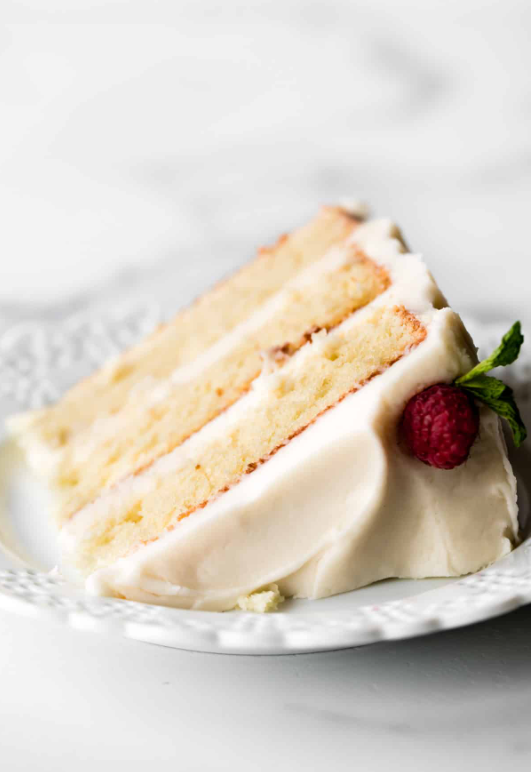
Finding the perfect vanilla cake recipe requires a celebration. Luckily we have cake!!!